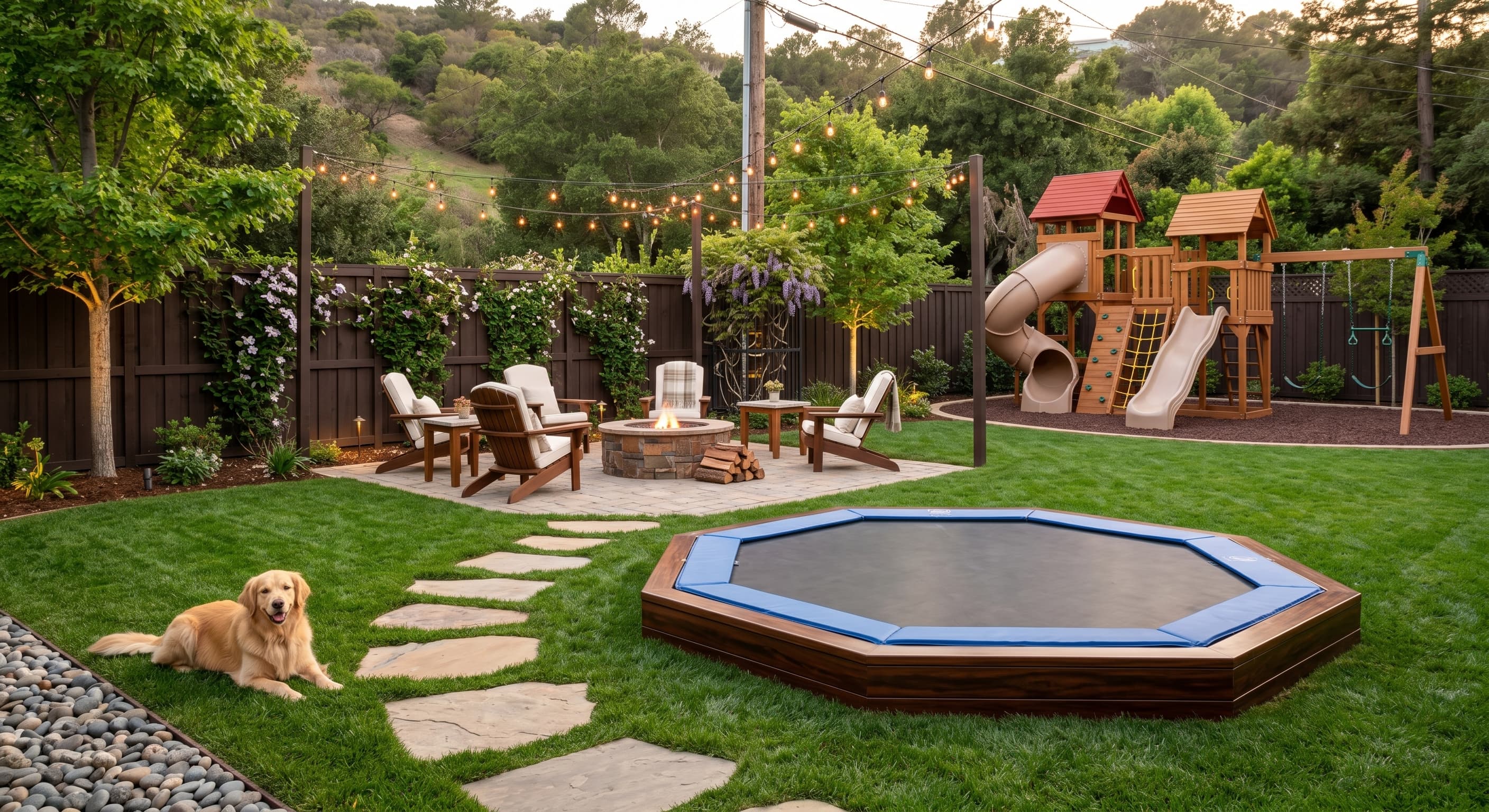
If you are looking to upgrade your backyard, you might be staring at the standard trampoline sitting on your lawn and wondering: Do I really need to buy a $2,000 custom setup, or can I just bury the one I already have?
The short answer is: Yes, you can absolutely put your existing above-ground trampoline in the ground.
You do not need to purchase a specialized "in-ground" trampoline. Standard backyard trampolines (whether they are made by Skywalker, Jumpflex, or Springfree) are perfectly capable of being sunken into the earth. However, you cannot simply dig a hole and drop it in. To protect the frame, maintain the bounce, and keep your yard safe, you must account for three critical factors.
1. The Soil Collapse (Why You Need a Wall)
The single biggest mistake DIYers make is digging a bowl-shaped hole and placing the trampoline directly against the dirt. Over time, rain, snow, and the vibrations from jumping will cause the soil walls to erode and cave in. This eventually buries the trampoline legs, bends the frame, and creates a dangerous, unstable jumping surface.
To safely bury an existing trampoline, you must build a barrier between the dirt and the trampoline frame. The strongest, most durable way to do this is by installing corrugated steel trampoline rings. These rings act as a heavy-duty structural retaining wall, holding back the earth and creating a clean, permanent pit that perfectly hugs the diameter of your trampoline.
2. The Air Trap (Protecting the Bounce)
Trampolines work by displacing air. When a jumper hits the mat of an above-ground trampoline, the air underneath is instantly pushed out the sides.
If you drop a trampoline into a tight hole without any ventilation, that air has nowhere to go. It becomes trapped, creating a vacuum effect that makes the mat feel stiff like concrete and completely ruins the bounce. A proper in-ground trampoline conversion kit is designed to leave a precise gap between the edge of the mat and the retaining wall, allowing air to escape smoothly so you never lose your standard bounce.
3. The Moisture Problem (Drainage)
Standard trampoline legs are made of galvanized steel, which resists rust in the open air. However, if those legs are submerged in a pool of standing muddy water at the bottom of a hole, they will corrode rapidly.
If you are burying your existing trampoline, you must account for rainwater. In most yards, adding a 4-to-6-inch layer of crushed gravel at the bottom of the pit provides sufficient space for water to percolate back into the earth. For yards with heavy clay or poor soil, you can read our complete guide on preventing water from pooling under your trampoline to explore solutions like French drains and sump pumps.
How to Convert Your Trampoline in 3 Steps
Converting your current trampoline into a seamless, flush-to-the-ground backyard feature is a straightforward weekend project:
Measure Your Frame
Measure the exact diameter of your metal frame (not the mat). Most standard trampolines are exactly 12ft, 14ft, or 15ft across.
Install the Retaining Ring
Dig the pit, bolt your corrugated steel retaining walls together, and backfill the exterior dirt.
Drop it In
Lower your existing assembled trampoline inside the steel ring, secure the safety pad over the springs, and enjoy a safer, sleeker backyard.
Ready to ground your adventure?
We manufacture premium, simple-to-install retaining walls designed specifically for existing trampolines. Start your order today to get a custom fit for your exact make and model.